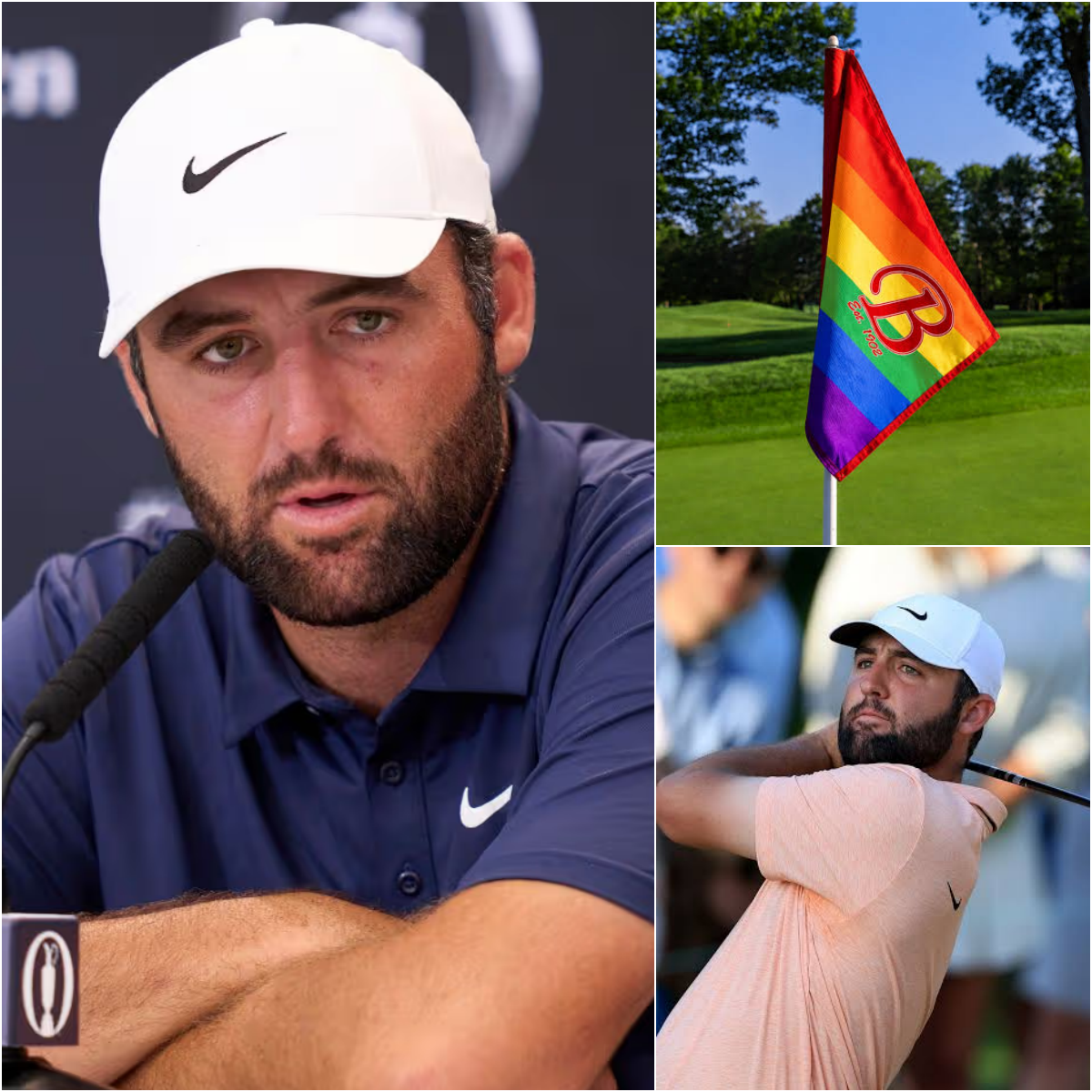
The international golf community was rocked today following public statements regarding world number one Scottie Scheffler’s stance on personal equipment choices and social symbolism during the 2026 professional PGA Tour season across America.
The American superstar golfer reportedly stated during a brief press encounter that he declines to wear gloves featuring the LGBTQ+ rainbow symbol, emphasizing his clear preference for maintaining a strict athletic focus throughout competition.
In his brief public remarks, Scheffler explained that professional golf should remain primarily dedicated to athletic excellence, fierce competition, and individual victory rather than serving as a public platform for political or social causes.
His firm stance immediately triggered intense global discussion across major sports media platforms, creating a sharp division of opinions among golf fans, veteran commentators, and fellow professional athletes around the world today.
Supporters of the champion golfer praised his decision as a brave defense of athletic neutrality, arguing that sports venues should remain entirely free from ideological messaging and social commentary during official tournament play.
Conversely, critics expressed deep disappointment, contending that symbolic gestures of inclusion play a vital role in making professional golf far more welcoming to diverse communities and historically underrepresented sports audiences worldwide.
The controversy highlights an ongoing debate within elite professional sports regarding the delicate balance between individual personal freedom, corporate social responsibility, and the traditional values of competitive international athletic leagues.

Golf commentators point out that Scheffler’s quiet demeanor and strong personal faith have long shaped his approach to public life, heavily influencing how he navigates complex social and cultural questions in sports.
Many veteran observers note that the discussion surrounding equipment messaging reflects broader societal debates about whether prominent public figures should actively endorse social movements or maintain complete personal neutrality online.
Inside the tournament clubhouse and among PGA Tour officials, authorities are carefully managing media inquiries while attempting to keep public attention focused primarily on the extraordinary level of athletic play on the course.
Several fellow tour professionals have voiced strong understanding for Scheffler’s perspective, emphasizing that athletes should always possess the personal freedom to choose which specific causes or symbols they personally support publicly.
On the other hand, sports advocacy groups stress that visibility matters significantly in global athletics, arguing that subtle symbols like rainbow gloves foster an essential culture of acceptance for LGBTQ+ youth everywhere.
The debate has ignited spirited conversations across digital sports forums, with thousands of passionate fans debating whether athletic equipment should carry any non-sports messages whatsoever during competitive professional golf tournaments nationwide.

Corporate sponsors associated with professional golf find themselves navigating a delicate landscape as they balance commitments to diversity initiatives with genuine respect for individual player preferences and deeply held personal beliefs.
Despite the surrounding media storm, Scheffler has maintained his characteristic composure on the driving range, remaining fully focused on his rigorous daily training regimen and upcoming championship tournament schedule this year.
His experienced caddie and dedicated support team continue to prepare for tournament play as usual, ensuring that equipment discussions do not distract from their primary goal of winning prestigious major golf championships.
Sports psychologists observe that handling high-profile public scrutiny is an essential modern skill for top-ranked athletes, who frequently find themselves placed directly at the center of complex cultural debates beyond competition.
The situation underscores how modern professional golf has increasingly become interconnected with broader social conversations, making it quite challenging for star players to completely avoid public scrutiny on sensitive global topics.
Golf tradition has historically favored personal discretion and quiet sportsmanship, but the fast-paced digital age has amplified every statement made by prominent figures, turning personal equipment choices into major global headlines.
Tournament directors have reiterated their commitment to providing a welcoming, inclusive environment for all sports fans while simultaneously respecting the personal convictions and individual constitutional rights of all competing professional golfers.

As the 2026 season progresses, analytical sports commentators will closely monitor how this discourse impacts crowd dynamics, player interactions, and overall fan engagement at upcoming tour events throughout the country.
Many casual fans express a desire to see sports journalism return to course strategy, shot-making, and scoring, hoping that pure athletic performance remains the main attraction for golf audiences across the globe.
Others argue that high-profile world athletes possess an extraordinary public platform and that their choices regarding symbolic support carry significant weight in shaping public perceptions of diversity and modern social progress.
Golf equipment manufacturers have subtly responded by offering customizable gear options, allowing professional players to tailor their apparel according to their unique personal comfort levels, aesthetic tastes, and individual values.
The ongoing public discourse reflects a broader evolution in sports journalism, where tournament coverage routinely extends beyond numerical statistics to explore the multifaceted cultural and social views of elite professional athletes.
Inside locker rooms across the tour, players from varied backgrounds continue to maintain warm, respectful professional relationships, demonstrating that athletic camaraderie can easily transcend differing personal views on social matters.

Scheffler’s consistent world-class performance on the golf course remains unquestioned, as his remarkable shot consistency and formidable mental toughness continue to set the supreme gold standard for modern professional golf excellence.
Media panels continue to analyze the statement thoroughly, exploring how major sports organizations can effectively foster diversity while honoring the personal boundaries and individual freedoms of their premier star athletes globally.
The international golf community remains highly engaged with this topic, proving that the intersection of competitive athletics, personal faith, and social representation continues to evoke deep emotional passion among sports fans.
As tournament rounds begin this week, public attention will inevitably shift back to the leaderboard, where Scheffler aims to let his exceptional play demonstrate his enduring, unwavering dedication to competitive victory.
Whatever differing viewpoints individual fans may hold regarding this specific decision, the conversation highlights the undeniable influence that world-class athletes possess as major cultural icons in contemporary global society today.
We will continue to follow all emerging developments surrounding this important conversation, providing balanced coverage on how evolving player perspectives shape the dynamic culture of professional golf around the world.
Ultimately, the intense passion generated by this topic demonstrates the enduring power of professional golf to spark meaningful conversation, engage diverse audiences, and reflect the complex, evolving values of modern society.
:max_bytes(150000):strip_icc():focal(994x0:996x2)/dolly-parton-portraits-PEOPLE-4-87f98cdf39964f4dbd06efcdd933369a.jpg)