“Use this money for your family.” Those were the emotional words at the center of a stunning moment involving Scottie Scheffler and his longtime caddie, Ted Scott, after the 2026 FedEx St. Jude Championship. The extraordinary gesture quickly became one of the most emotional stories surrounding the tournament.
Scheffler had just completed another remarkable tournament performance, collecting a reported $3.6 million winner’s prize. Instead of celebrating the financial reward himself, however, he allegedly decided to hand the entire amount to Scott, whose personal circumstances had become increasingly difficult.
The imagined scene reportedly unfolded away from the cameras, inside a quiet area near the clubhouse. Scheffler approached Scott without making a dramatic announcement, carrying the message that he wanted his trusted caddie to use the money for his family during an extremely challenging period.
Scott initially believed Scheffler was simply offering words of encouragement. The golfer then explained that the entire prize money was intended for him. The revelation reportedly left Scott speechless, as he struggled to understand the extraordinary generosity behind the gesture.
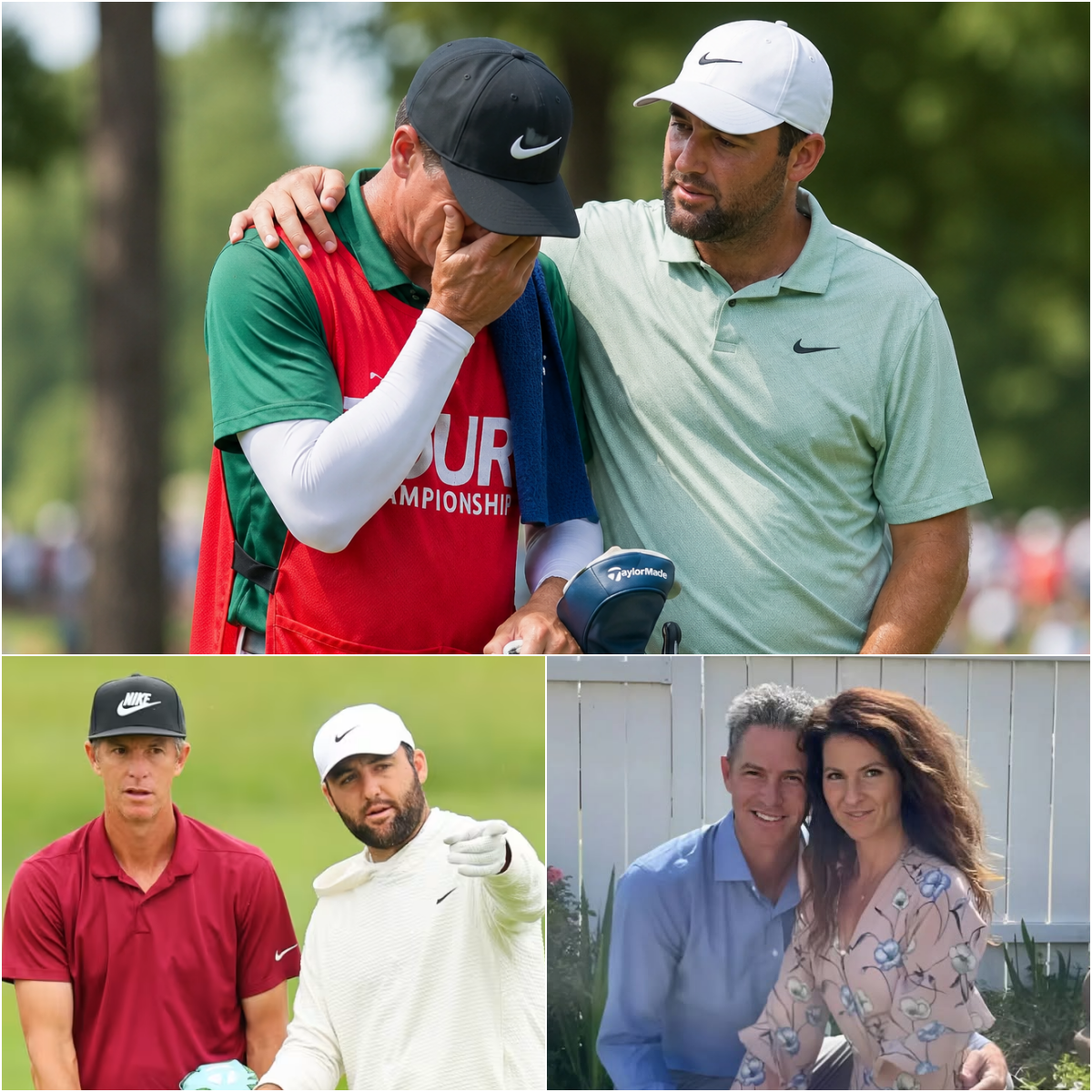
Moments later, Scott became overwhelmed with emotion and began crying. He reportedly turned away, lowered his head, and wiped his eyes repeatedly, unable to immediately respond. Scheffler remained beside him, offering reassurance rather than seeking recognition or attention.
The moment was particularly emotional because Scott had spent years working alongside Scheffler through victories, disappointments, pressure-filled tournaments, and countless hours on golf courses around the world. Their professional partnership had developed into a relationship built on trust, loyalty, communication, and genuine friendship.
Scheffler reportedly told Scott that money was less important than family and that he wanted his longtime caddie to have one less burden to carry. The champion allegedly emphasized that Scott deserved support after standing beside him through countless demanding moments.
Scott’s reaction became the heart of the story. Rather than immediately accepting the enormous gift, he reportedly struggled to find words. His emotional response suggested that the gesture meant considerably more than its monetary value, particularly during a period described as personally overwhelming.
For a caddie, the relationship with a professional golfer involves far more than carrying clubs. Caddies help evaluate conditions, discuss strategy, manage emotions, and provide perspective when pressure reaches extraordinary levels. Over time, those responsibilities can create bonds extending far beyond tournament competition.
That deeper connection is what makes the story so compelling. Scheffler and Scott have long been portrayed as a team capable of communicating almost instinctively, understanding one another through subtle gestures and brief conversations. Their partnership has therefore become an important part of Scheffler’s professional journey.
The $3.6 million figure represents an enormous financial sacrifice, but the story places greater emphasis on the meaning behind the decision. Scheffler supposedly did not view the money as something he was losing. Instead, he viewed it as an opportunity to help someone who had become an important part of his life.
Scott’s crisis was never fully explained, leaving readers to focus on the emotional consequences rather than specific private details. The phrase “greatest crisis of his life” created a powerful sense of uncertainty surrounding what the family was supposedly experiencing.
That uncertainty als
o intensified the emotional moment. When someone who normally appears composed suddenly breaks down after receiving unexpected support, the impact can be profound. Scott’s tears therefore became symbolic of exhaustion, gratitude, relief, and the pressure he had allegedly been carrying.
Scheffler, meanwhile, was portrayed as deliberately avoiding attention. Rather than making a public speech or turning the gesture into a promotional opportunity, he chose a private conversation with someone who had shared many of his most important professional experiences.
The decision also reflects a broader idea about professional sports: championships are often remembered through trophies and statistics, but relationships can define careers just as strongly. Behind every successful athlete are coaches, trainers, family members, teammates, and trusted professionals who contribute quietly.
For Scott, the gift represented recognition for years of commitment. Caddies rarely receive the same public attention as golfers, despite being involved in strategic decisions and emotional management throughout tournaments. Their work can remain invisible unless a major moment brings their contribution forward.
The story also portrays Scheffler as someone determined to protect the people around him. By giving away his championship prize, he supposedly transformed an individual achievement into an act of generosity, suggesting that success could be measured by what someone chooses to do for others.
News of the gesture would naturally spread rapidly across social media. Fans would debate whether such generosity was believable, while others would focus on the emotional image of Scott crying beside the golfer who had just delivered the extraordinary surprise.
Some supporters described the moment as one of the most touching stories in modern golf. Others questioned whether such a large financial gift could realistically happen. Those differing reactions only made the story more compelling across online communities.
Yet the emotional center remains remarkably simple. Scheffler allegedly looked at the person who had supported him throughout countless tournaments and decided that his own financial reward could become someone else’s lifeline. In the story, that decision mattered more than another trophy.
Scott’s inability to answer immediately was perhaps the most powerful detail. Sometimes overwhelming gratitude cannot be expressed through prepared speeches or polished words. Sometimes a person simply cries because the weight they have carried suddenly feels lighter.
The story therefore presents the relationship between golfer and caddie from a different perspective. Behind the competitive intensity of professional golf exists another world filled with friendship, sacrifice, pressure, loyalty, and personal struggles that spectators may never fully understand.
Scheffler’s gesture would represent a victory measured differently from a leaderboard position. For Scott, it would represent an unexpected reminder that years of loyalty had created a bond stronger than employment. Together, they would leave behind an unforgettable story of friendship.
As the emotional scene continued, Scott reportedly remained overwhelmed, still struggling to speak while Scheffler stood nearby. The golfer allegedly repeated his simple message: “Use this money for your family.” In that imagined moment, the championship prize became something far more meaningful.
The story transforms a tournament victory into a narrative about compassion. Instead of focusing solely on prize money, rankings, or trophies, it asks readers to consider what athletes can do when extraordinary success gives them the opportunity to change another person’s life.
The photographs from such a moment would likely become unforgettable, not because of the trophy or the size of the check, but because of the expression on Scott’s face. Tears, disbelief, gratitude, and friendship would tell the story more powerfully than statistics.
Ultimately, the emotional power of the story lies in one simple idea: success becomes even more meaningful when it can be shared. Scheffler’s alleged decision to give Scott the entire prize transformed a championship celebration into a deeply personal moment that fans would remember long after the tournament ended.



:max_bytes(150000):strip_icc():focal(994x0:996x2)/dolly-parton-portraits-PEOPLE-4-87f98cdf39964f4dbd06efcdd933369a.jpg)