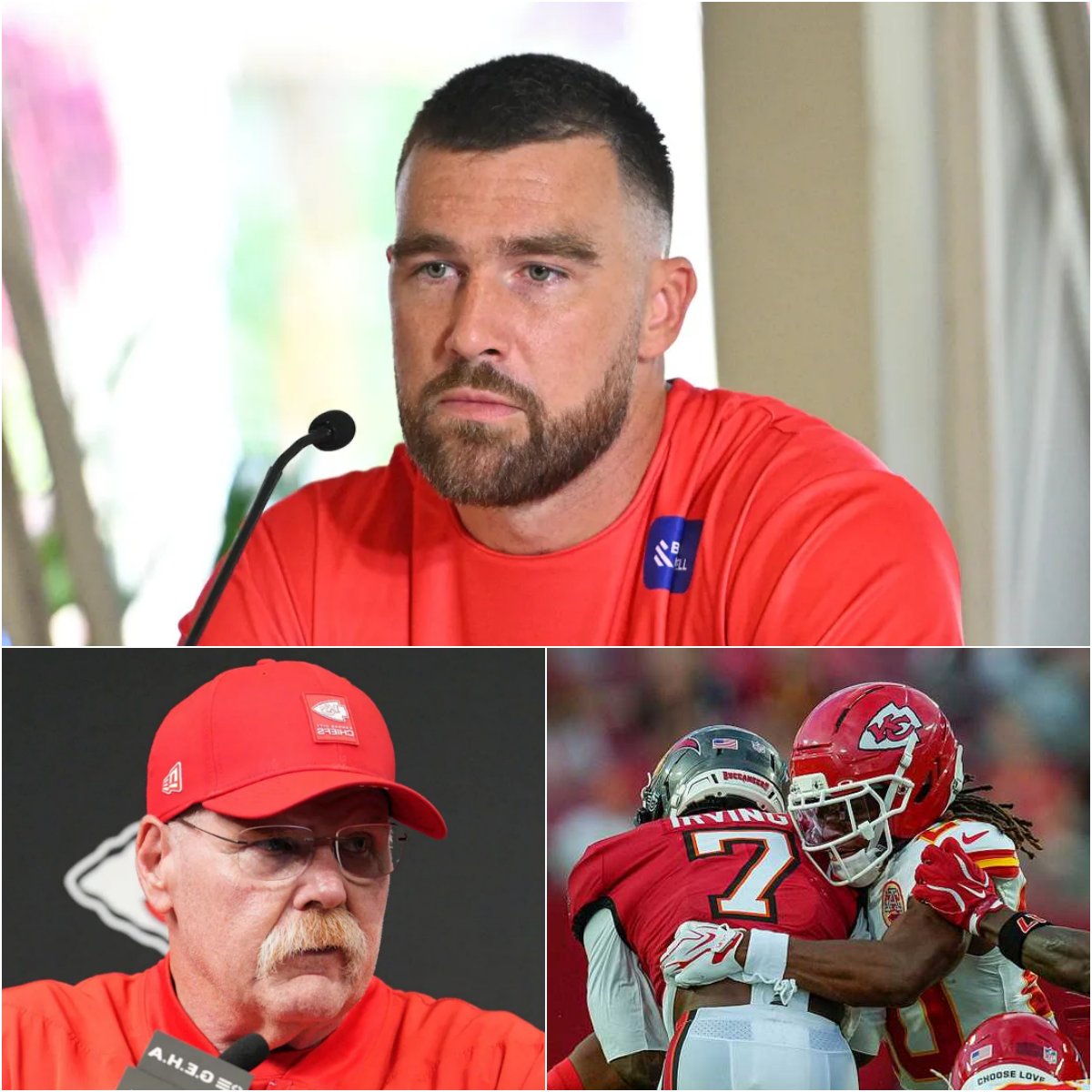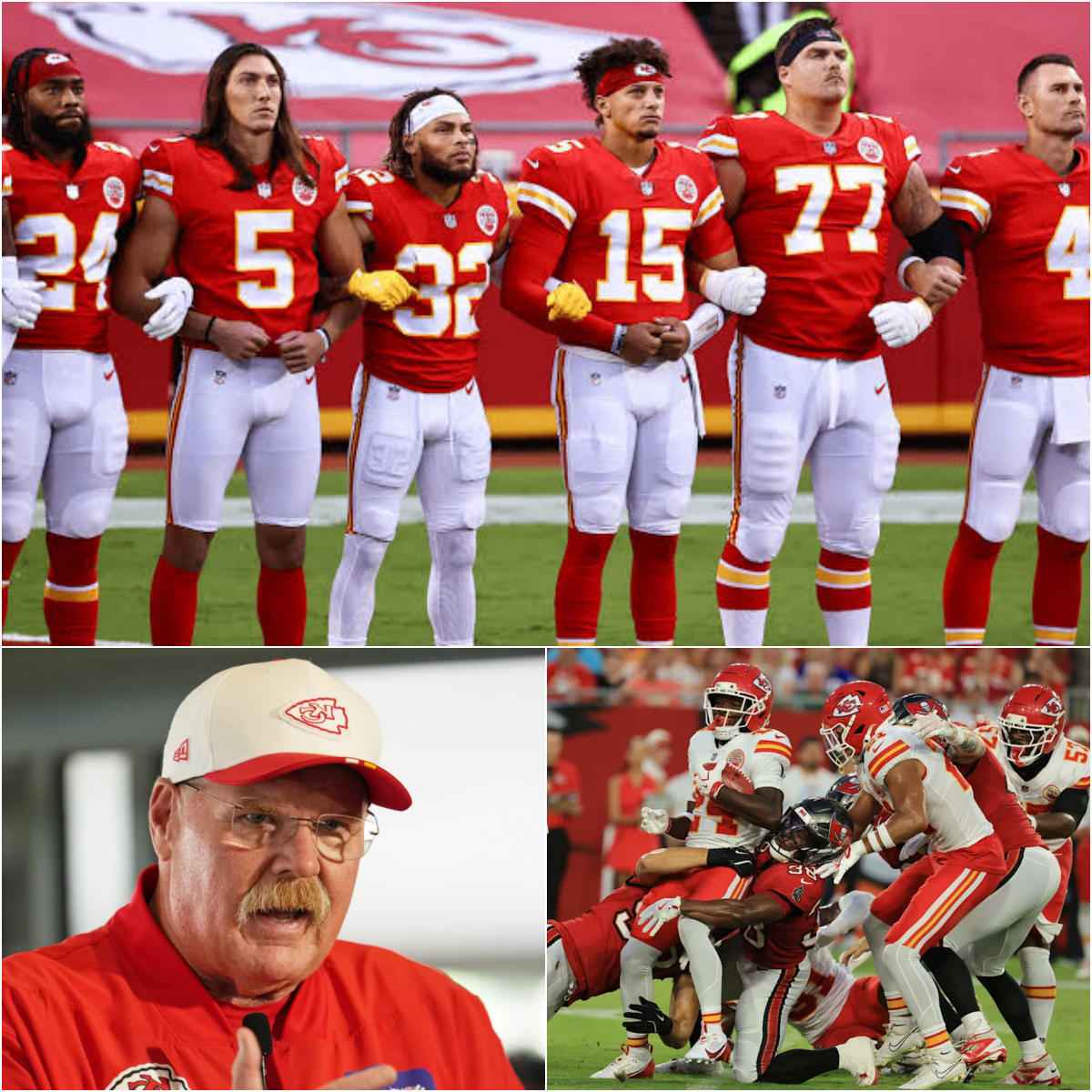
A stunning storyline emerged in the aftermath of Kansas City’s 12–20 preseason defeat to the Los Angeles Rams, as reports of tension inside the Chiefs’ locker room quickly captured attention. According to the scenario described, team leadership held an intense two-hour meeting before making a controversial decision.
The dramatic meeting reportedly centered on a player whose conduct had allegedly frustrated coaches, teammates, and team leadership. Patrick Mahomes, described in the report as taking an unusually forceful position, allegedly warned that personal standards could not be sacrificed for the sake of maintaining harmony inside the organization.
“He’s ruined everything—he doesn’t deserve to step onto the field for this game.” That explosive statement forms the centerpiece of the developing story, although no verified public record has established that Mahomes actually made those exact remarks or that Kansas City has formally suspended a player.
The controversy comes against the backdrop of a disappointing preseason performance against the Rams. Kansas City managed only 12 points, while Los Angeles produced 20, leaving fans frustrated despite the limited significance normally attached to preseason results and the extensive rotations involving younger players and roster hopefuls.
Preseason football can create misleading impressions because established starters frequently receive limited playing time, while coaches evaluate backups, rookies, special-teams players, and players competing for roster positions. Nevertheless, a poor performance can expose weaknesses, generate internal conversations, and increase pressure on individuals already facing questions about their preparation.
Within the dramatic scenario, the unidentified player allegedly became the focus of those concerns. Team leaders reportedly believed his behavior had crossed a line, creating a situation where disciplinary action was considered necessary. The alleged decision was presented as unanimous, suggesting that coaches and players had reached an unusually strong consensus.
That detail, however, raises important questions. NFL teams generally handle disciplinary matters internally, and public announcements concerning suspensions can vary depending on the nature of an incident. Without an official statement from Kansas City, the identity of the player and the alleged behavior should be treated as unconfirmed rather than established fact.
Mahomes’ supposed involvement makes the story particularly compelling because the Chiefs quarterback occupies a unique position within the organization. As the team’s franchise quarterback and longtime leader, his influence extends beyond statistics. His public comments can shape narratives, affect locker-room perceptions, and instantly become major national talking points.
Still, leadership does not mean that every dramatic quote circulating online is authentic. Social media frequently transforms rumors, fictional scenarios, satire, and unverified reports into apparent breaking news. A quotation attributed to a famous athlete can spread thousands of times before anyone confirms whether the player actually said it.
The Rams defeat therefore provides an intriguing backdrop for examining Kansas City’s larger challenges. Even when preseason results do not determine the regular-season standings, performances can influence roster decisions. Players fighting for opportunities know that every practice rep and exhibition appearance can affect whether they remain with the team.
For a player already under scrutiny, a disappointing preseason game could theoretically intensify concerns. Coaches might evaluate effort, discipline, communication, assignments, preparation, and overall professionalism. These factors can matter just as much as a single missed tackle, dropped pass, interception, or poor offensive possession when determining roster decisions.
The alleged two-hour meeting consequently becomes the most dramatic element of the story. If such a meeting actually occurred, its purpose could have involved several issues unrelated to one specific game. NFL organizations routinely conduct lengthy internal discussions about personnel, performance, injuries, strategy, culture, and roster management.

The phrase “unanimously agreed to suspend” also deserves careful scrutiny. A formal suspension involving an NFL player would ordinarily have a specific context, and depending on the circumstances, the league, team, or player could provide information. Without documentation, readers should not assume that a reported suspension has actually happened.
Nevertheless, the story has generated attention because it combines several ingredients that naturally dominate football conversation: Patrick Mahomes, the Chiefs, an unexpected defeat, locker-room tension, and an unnamed player supposedly facing severe consequences. Such combinations can produce enormous engagement, particularly during the emotionally charged weeks leading toward the regular season.
For Kansas City supporters, the more important question is not whether one preseason defeat represents disaster. It is whether the team can identify weaknesses before meaningful games begin. The Chiefs have built their reputation on preparation, adaptability, discipline, and late-game execution, making internal standards a constant subject of discussion.
Mahomes has repeatedly been portrayed throughout his career as someone who expects accountability from himself and his teammates. That leadership image makes any alleged confrontation involving him especially powerful. But separating legitimate leadership from invented social-media drama remains essential, particularly when no official evidence supports the most sensational claims.
If the unnamed player truly violated team expectations, Kansas City could eventually provide clarification through an official announcement or roster move. Until then, speculation about the individual’s identity risks unfairly damaging the reputation of someone who may not have done anything wrong.
The preseason loss itself should also be placed into proper context. Teams often experiment heavily during exhibition games, and coaches may prioritize evaluation over winning. A 12–20 result can be disappointing, but it does not automatically indicate that a team is heading toward a disastrous regular season.
For the Chiefs, the immediate objective would be straightforward: evaluate the film, correct mistakes, improve execution, and determine which players have earned opportunities. If disciplinary concerns exist, those decisions would likely be handled separately from the emotional reaction surrounding one preseason result.
The larger lesson is that modern NFL narratives can move faster than verified information. A dramatic quotation, an alleged locker-room confrontation, and a mysterious disciplinary decision can become a viral story within minutes. That speed makes responsible reporting particularly important for fans following breaking developments.
At this stage, the most sensational elements of the story remain unverified. There is no reliable basis here to identify the supposed player, confirm the alleged Mahomes quotation, or state definitively that Kansas City suspended someone because of the Rams preseason defeat.
What is certain is that preseason football has once again demonstrated its ability to create enormous discussion. One disappointing performance can trigger questions about preparation, roster construction, leadership, and accountability long before the games that actually count arrive.
If the reported controversy eventually receives official confirmation, the identity of the player and the precise reason for disciplinary action would dramatically change the conversation surrounding Kansas City. Until that happens, the responsible conclusion is simple: the allegations remain a developing and unconfirmed storyline, not established NFL fact.
For Mahomes and the Chiefs, however, the message behind the controversy remains familiar. Expectations in Kansas City are extraordinarily high, and every player competing for a place on the roster understands that talent alone may not be enough. Preparation, discipline, accountability, and trust remain essential.
The Rams result may eventually be forgotten once the regular season begins. But if genuine internal problems exist, Kansas City will need to address them quickly. The difference between preseason frustration and meaningful regular-season adversity often comes down to how effectively a team responds behind closed doors.
And that is ultimately why this dramatic story has attracted so much attention. It is not simply about one 12–20 preseason loss. It is about leadership, accountability, and the enormous expectations surrounding one of football’s most recognizable franchises. Until verified details emerge, however, fans should separate confirmed events from speculation.




:max_bytes(150000):strip_icc():focal(749x0:751x2)/dolly-parton-tout-a982fd2fdd354d4faffcd0ca8f6bf83a.jpg)